
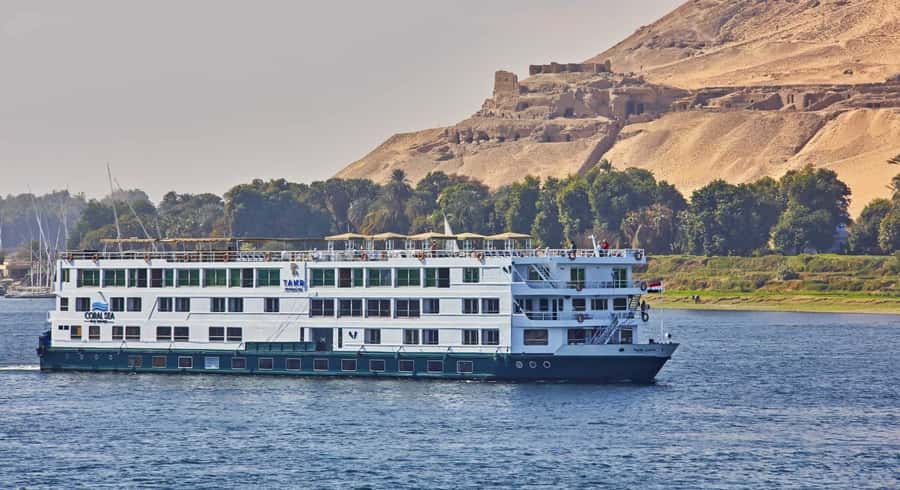
Review · LUXOR
Aswan: 3-Day Nile River Cruise to Luxor with Guided Tours
The best part of this trip is the way it links Egypt’s major southern sights by water. You visit Philae Temple, Edfu, and the Valley of the Kings without packing up for a new hotel each night. I especially like the sunset arrival at Kom Ombo and the slow Nile views between stops.
I also like the strong guide service. Samy, Omar, George, Adel, and Ahmed are among the guides praised for clear explanations and practical help. The main caution is that 5-star on the Nile may not match a 5-star hotel on land: some cabins and ships feel dated, food can be average, WiFi is not included, and the sites follow a crowded schedule.
Key points to know before booking

- Philae begins the journey: Reach Isis’s island temple by boat after an 8:00 AM pickup in Aswan.
- Edfu arrives by horse carriage: The ride adds local character, but you should expect attention from drivers and sellers.
- The cruise is comfortable, not ultra-luxury: Cabins, meals, and staff service receive good marks, while ship quality varies.
- Luxor day is packed: The Valley of the Kings, Hatshepsut’s temple, Colossi of Memnon, Karnak, and Luxor Temple all fit into one long sightseeing day.
- Guides make a real difference: Samy, Omar, George, Adel, Ahmed, and others have been singled out for helpful explanations and care.
- Budget for extras: Drinks, WiFi, entrance fees, and tips are not included in the $480 price.
A Nile cruise that connects Aswan and Luxor
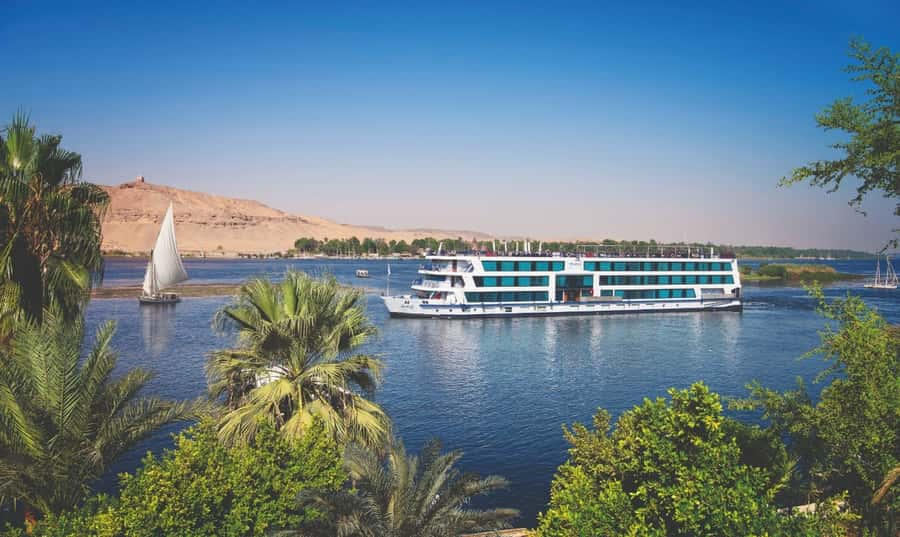
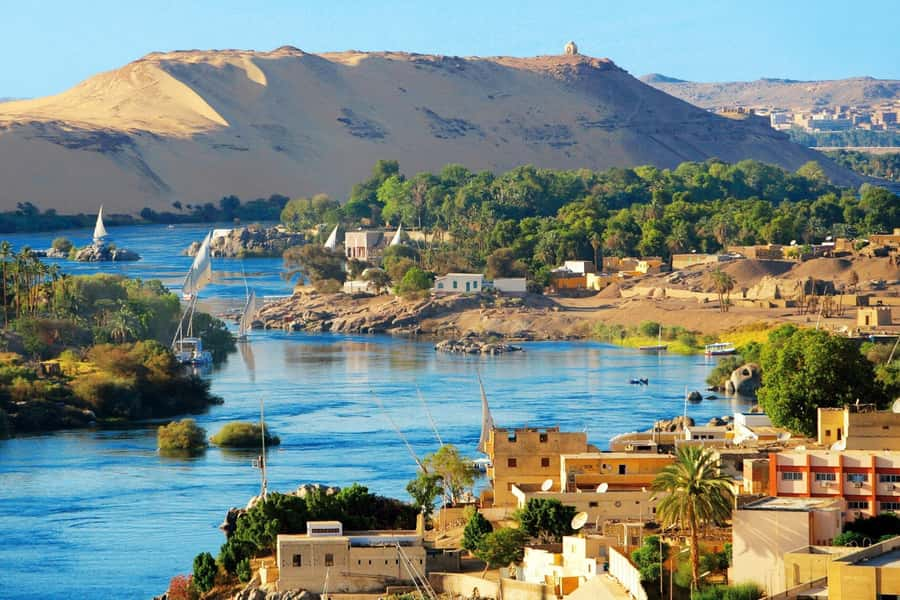
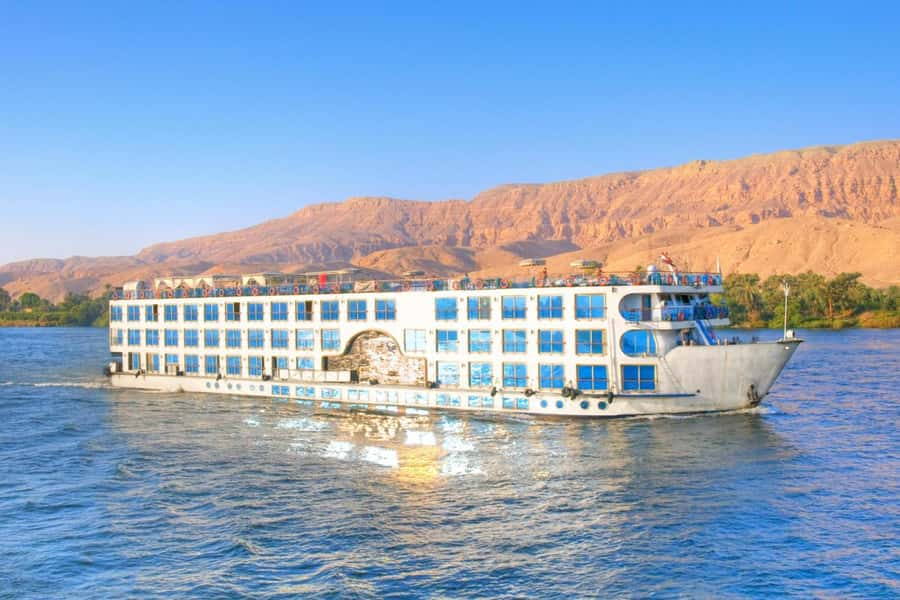
For $480 per person, this two-night, three-day trip gives you a moving base between Aswan and Luxor. That matters in Egypt. Instead of arranging separate transfers, hotels, and day tours, you settle into one cabin and let the boat carry you past villages, fields, riverbanks, and ancient sites.
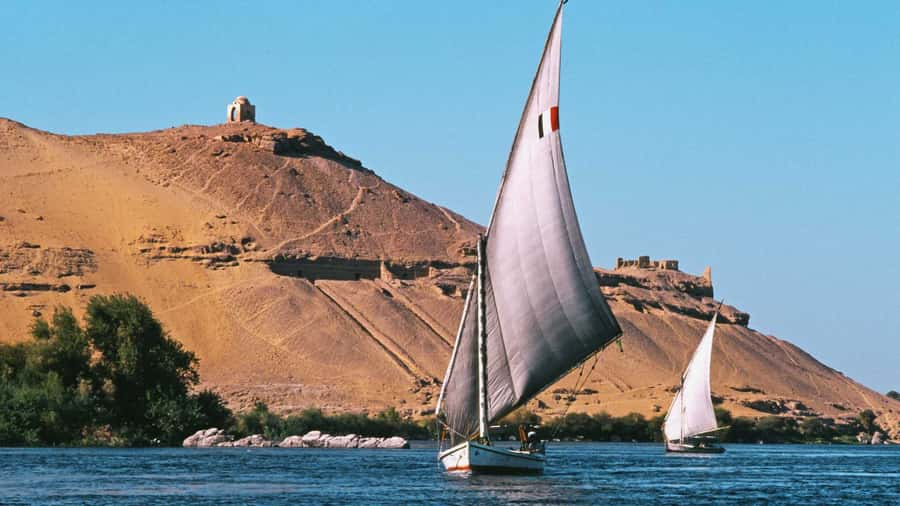
The cruise is also a pleasant change of pace from road travel. The sightseeing is active, but the hours between visits give you time to sit on deck, watch the Nile, and enjoy afternoon tea while the ship heads north.
This is not a private, slow-paced archaeological journey. Most Nile ships follow similar timetables, so several temples can be crowded. The final day in Luxor is especially full. Still, the route gives you a practical first look at the great monuments between Aswan and Luxor in a short amount of time.
More Nile Cruises in Luxor:
- From Luxor: 3-Night Nile Cruise to Aswan and Hot Air Balloon
★ 3.7 · 297 reviews - 5 Days Private Guided Nile River Cruise Tour from Luxor to Aswan
★ 5.0 · 229 reviews - Historia Hotel Nile Cruise, Mon. from Luxor 4 nts inc. Excursions
★ 5.0 · 185 reviews
Day 1: Philae Temple and the High Dam
Pickup from your Aswan hotel is scheduled for 8:00 AM. The first visit is Philae Temple, dedicated mainly to Isis, one of ancient Egypt’s most important goddesses.
Philae is special because the temple complex sits on an island. You reach it by boat, which gives the visit a natural sense of arrival. The setting is part of the appeal: stone pylons and columns rise above the water, and the temple feels separate from modern Aswan.
Your guide should help you read the carved scenes, identify Isis and other deities, and understand why the site was important. This is a place where a guide adds real value, since the reliefs can look like a wall of symbols if you walk through without context.
The next stop is the High Dam, built in 1960 to control the Nile’s annual floods and protect nearby communities. It is not as visually ornate as Philae, but it helps explain modern Egypt’s relationship with the river. The dam changed farming, electricity production, and the seasonal rhythm of the Nile.
After the morning visits, you check in to the cruise ship. Sailing is scheduled for about 2:00 PM, though Monday departures can follow a different pattern. On Mondays, the ship may sail late on the first night or on Tuesday afternoon, but the sightseeing program is still supposed to cover the listed stops.
Sunset at Kom Ombo
The ship reaches Kom Ombo around sunset. This timing can be beautiful, with the temple’s columns catching the last light, but it also means you should have your camera and a light layer ready when you leave the ship.
Kom Ombo is unusual because it was dedicated to two gods, Sobek and Horus. Sobek had the head of a crocodile, while Horus was shown with the head of a falcon. The double design reflects this shared dedication, with separate areas for each god.
Your guide can point out the temple’s reliefs and explain the role of the two deities. The site is not as large as Karnak, but its layout is easy to understand and its crocodile connection makes it memorable.
After Kom Ombo, the ship continues to Edfu for the overnight stop. The first day includes a lot of movement, but the cruise schedule keeps the logistics fairly tidy. Lunch on day one is included. Drinks are not, so keep Egyptian pounds available for purchases and tips.
Day 2: Edfu and the Temple of Horus
The second morning starts early with breakfast, followed by a horse and carriage ride to the Temple of Horus. This is one of the more distinctive parts of the trip. The carriage gets you through Edfu’s streets and saves you from making the journey on foot.
The transport is practical, but it is also where you may encounter pressure to tip or buy something. Keep small notes ready, and listen carefully to your guide about where to meet after the visit. One practical criticism of this sort of cruise is that tipping can become a frequent topic, which may make the trip feel less relaxed.
The Temple of Horus is one of Egypt’s best-preserved ancient temples. Its huge entrance and clear reliefs make it easier to imagine how a working temple once looked. Inside, your guide can explain the Sacred Drama, the mythic conflict between Horus and Seth, shown through inscriptions and carved scenes.
I would give Edfu plenty of attention. The temple is not simply another stop between Aswan and Luxor. Its preserved walls let you see how an Egyptian temple was organized, from the monumental entrance to the inner sacred rooms.
You return to the ship for lunch and afternoon tea while sailing toward Luxor. The boat passes through the Esna lock, a useful reminder that this is an active river route, not just a floating hotel.
Arrival in Luxor is scheduled for around 7:00 PM. Since the major Luxor sightseeing comes on day three, the second evening is mainly useful as a rest period. You will want it, because the next day packs several major sites into one route.
More Three-Day Trips in Luxor:
- From Cairo: 3-Day Nile Cruise with Hot Air Balloon & Flights
★ 3.7 · 71 reviews - Aswan: 3 Days Nile River Cruise & Hot Air Balloon Ride
★ 4.2 · 18 reviews - Cairo: 3-Day Guided Cairo and Pyramids Tour with Nile Cruise
★ 4.7 · 4 reviews
What the cruise ship is really like
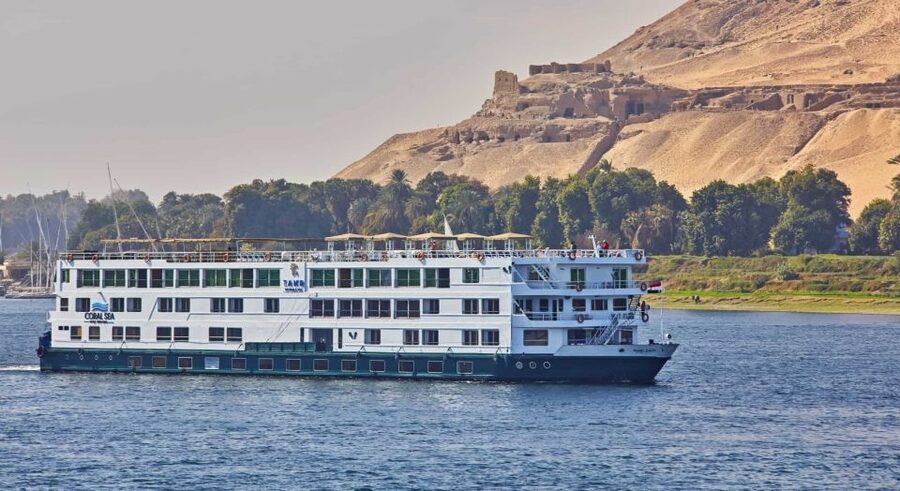
The ship is sold as a 5-star Nile cruise, but use that label with care. The available cabins have their own facilities, and many passengers find the rooms clean and comfortable. The ship’s staff are often praised for being friendly, and the buffet offers a reasonable range of choices.
Some cabins have been described as spacious, with comfortable mattresses. Other passengers found the boat average or somewhat old, though the facilities worked properly. That difference may reflect changing ships, cabins, or personal expectations.
Food is another mixed point. Several people enjoyed the meals and found plenty of choice. Others considered the food average, with vegetarian options less satisfying than meat dishes. If you have a strict diet, ask the operator about available choices before paying.
There is no included WiFi. That is easy to overlook when comparing prices, so plan to use mobile data or accept a short digital break. Drinks are also extra.
The strongest part of the ship experience is the combination of rest and movement. You sleep in one cabin, eat onboard, and wake near the next historic site. The weaker part is that the cruise can feel commercial, especially when tips and paid extras enter the conversation.
Day 3: The Valley of the Kings
The final day begins outside central Luxor at the Valley of the Kings. This dry valley became the burial ground for many New Kingdom rulers, including Tutankhamun.
You walk among the royal tombs with your guide, then enter the tombs open during your visit. The exact tombs can vary, and entrance arrangements are not included in the tour price, so check what your ticket covers before the visit.
Tomb interiors can be hot, narrow, and steep in places. Wear shoes with a secure grip, carry water, and do not rush. The painted chambers are the reward. Their colors and scenes were designed to guide the dead into the next life, and they offer a very different experience from the open courtyards of Philae or Edfu.
The Valley is one of the places where a good guide matters most. Names, gods, burial customs, and royal succession can blur together. Guides such as George and Adel have been praised for explaining Luxor’s sites clearly and for helping with practical details. A capable guide also helps you avoid wasting time in the wrong place during a tight schedule.
Queen Hatshepsut and the Colossi of Memnon
Next comes the Temple of Queen Hatshepsut at Deir el-Bahari. Hatshepsut ruled Egypt as pharaoh and is one of the most important women in ancient Egyptian history.
The temple is built into the cliffs, with broad terraces rising toward the rock face. Its design is different from the tombs and temples visited earlier, which makes it a useful contrast on the Luxor route. Your guide can explain Hatshepsut’s unusual path to power and the imagery used to present her as a legitimate ruler.
The stop at the Colossi of Memnon is shorter. These two giant stone statues once guarded the entrance to a temple complex that no longer survives in its original form. They face the Nile and provide a quick but worthwhile photo stop.
Do not expect a long visit here. The appeal is scale and setting rather than a large complex to explore. It works well as a pause before the heavier sightseeing at Karnak.
Karnak Temple and the Great Hypostyle Hall
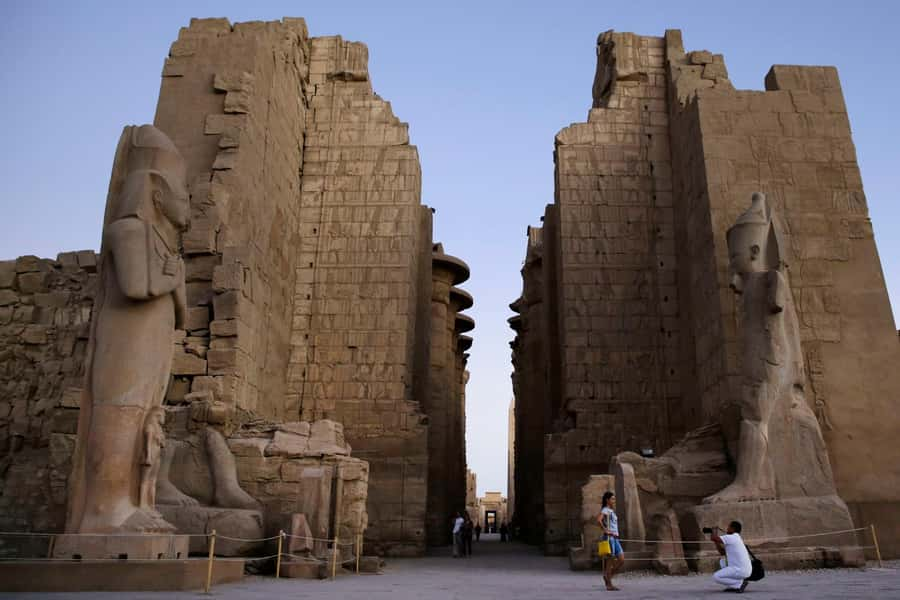
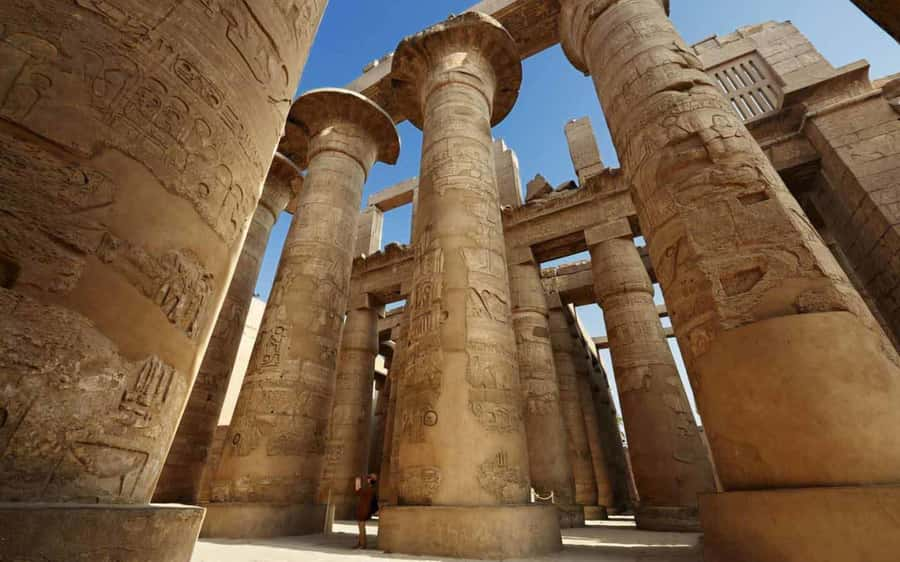
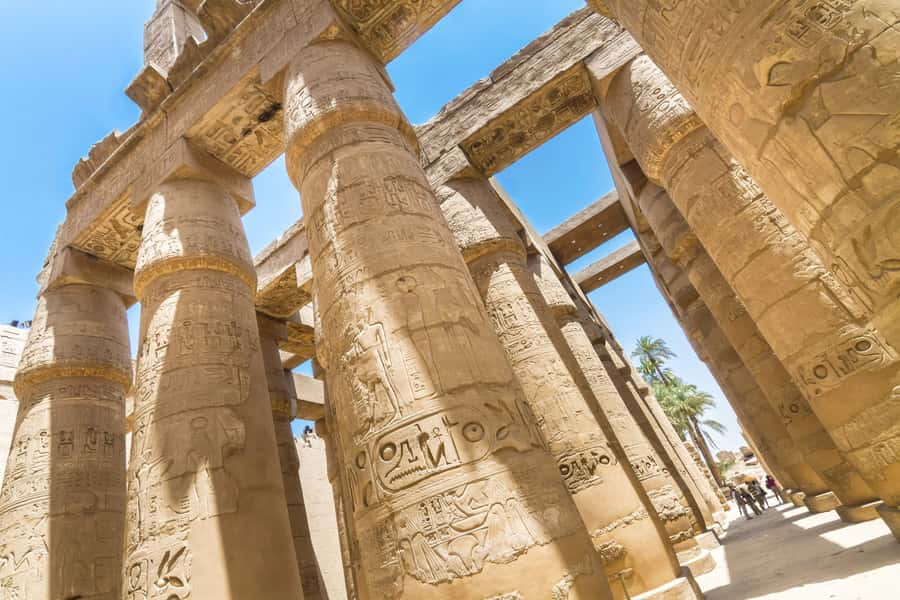
Karnak is the largest and most demanding visit of the day. The complex was dedicated mainly to Amun, along with his wife Mut and other gods. It grew over many centuries, which explains its enormous size and the mixture of courtyards, pylons, columns, statues, and carved walls.
The Great Hypostyle Hall is the star. Its forest of massive columns makes the space feel almost impossible to build by hand. Look up as you walk through, since the carved surfaces and scale are easy to miss if you focus only on the path ahead.
Karnak also preserves the Egyptian version of the peace treaty between Egypt and the Hittites. This is one reason a guide can improve the visit. Without help, you might see only large walls and columns. With context, the complex becomes a record of religion, royal power, building projects, and diplomacy.
Crowds are the main drawback. Nile cruises often follow similar schedules, so the famous halls can fill quickly. This is not a flexible private tour where you can shift every stop by an hour. If you want quiet photographs, ask your guide if any timing adjustments are possible, but do not count on having Karnak to yourself.
Luxor Temple and the final transfer
The last major sight is Luxor Temple, followed by the Obelisk of Ramses II in front of the first pylon. Luxor Temple sits in the modern city, so the experience feels different from the desert setting of the Valley of the Kings.
The temple is especially useful as a final stop because it brings together several layers of Egyptian history in one urban setting. The columns, statues, pylons, and obelisk give you a strong closing view of ancient Luxor.
After the sightseeing, you are transferred to the airport or railway station. The stated drop-off coverage is within Luxor’s east bank, so confirm your exact final location when you book if you have a hotel or onward connection elsewhere.
Guides, service, and the human side
Guide quality is the clearest strength of this experience. Samy has received particularly warm praise for being helpful and well informed, while Omar is noted for strong care in Aswan. George and Adel have also been praised for their explanations in Luxor, and Ahmed has earned good marks for temple knowledge.
The guides do more than recite dates. They may help with meeting points, drivers, photographs, and extra arrangements. One guide helped organize a hot-air-balloon trip after arrival in Luxor, though that activity is not part of this package.
Drivers have also been praised for making people feel safe. That matters on a schedule with several road transfers around Luxor and Aswan.
The downside is that service can include frequent tipping discussions. Bring enough Egyptian pounds for tips and small purchases, and decide in advance what you are comfortable giving. You can be generous without letting money talk dominate the trip.
Is $480 good value?
At $480 per person, the price covers two nights on the cruise, a cabin, selected meals, Aswan hotel pickup, an English-speaking Egyptology guide, the horse carriage at Edfu, taxes, and meet-and-assist service.
That is useful value if you want a packaged route. Booking the same elements separately would require arranging transport between Aswan and Luxor, two nights of lodging, guides, and visits at several sites. The cruise also gives you the Nile portion, which is the main reason to choose this format.
The price does not include entrance fees, drinks, WiFi, or tips. Those costs can affect your final budget, especially at the Valley of the Kings and other major sites. Ask for the current entrance-fee details before booking, since the supplied information does not give the amounts.
I would choose this trip for convenience and coverage, not for luxury perfection. If your priority is a polished ship, quiet temple visits, or highly flexible timing, you may find the standard cruise format limiting.
Who should book this Nile cruise?
I would recommend it to you if this is your first visit to southern Egypt and you want the major sights explained in English. It also suits solo visitors who prefer organized transport and local guides, as well as couples who want two nights on the Nile without planning every transfer.
It is a good fit for people who enjoy seeing a lot in a short time. The tradeoff is an early start, crowded monuments, and a long Luxor day.
You should think twice if you need reliable WiFi, have strict vegetarian dining needs, or expect a Western-style luxury hotel. You should also be comfortable with extra fees and tipping customs.
Free cancellation is available up to 24 hours before the start, and you can reserve now and pay later. Those options help if your Egypt plans are still shifting.
FAQ
How long is the Nile cruise from Aswan to Luxor?
The experience lasts three days and includes two nights onboard the Nile cruise.
What time is pickup in Aswan?
Hotel pickup in Aswan is scheduled for 8:00 AM on the first day.
Which sites are visited in Aswan?
The first day includes Philae Temple and the High Dam.
Does the cruise visit Kom Ombo?
Yes. The ship reaches Kom Ombo around sunset on the first day, then continues to Edfu for the overnight stop.
How do I reach the Temple of Horus at Edfu?
The tour includes a horse and carriage ride from the cruise ship to the Temple of Horus.
What is included in the meals?
Lunch is included on days one and two. Breakfast is included on days two and three.
Are entrance fees included?
No. Entrance fees are not included in the stated price.
Is WiFi available on the cruise?
WiFi is not included. The tour information specifically lists WiFi among the exclusions.
Can I cancel the booking?
Yes. You can cancel up to 24 hours in advance for a full refund. You can also reserve the experience and pay later.
Should you book it?
Book this cruise if you want an efficient Aswan to Luxor route with guides, included transfers, and the simple pleasure of watching Egypt pass by from the Nile. The excellent guide support and broad sightseeing program are the main reasons to choose it.
Go in with realistic expectations about the ship. Cabins and service can be comfortable, but the 5-star label does not guarantee modern luxury, strong WiFi, or gourmet food. Keep cash ready for tips and extras, accept that major temples may be crowded, and you will be better prepared to enjoy what this trip does best: linking Egypt’s greatest southern monuments in one practical journey.
Newly added river trips around Luxor
- From Cairo: 4-Day Nile Cruise to Aswan w/ Balloon & Flights★ 3.6 · 86 reviews
- From Cairo: 4-Day Nile Cruise from Aswan to Luxor with Meals★ 4.4 · 24 reviews
- From Aswan: 4-Day 3-Night Nile Cruise with Hot Air Balloon★ 4.5 · 50 reviews
- Aswan to Luxor: 4-Day Luxury Dahabiya Nile Cruise Adventure★ 4.7 · 28 reviews
- From Cairo: 8-Day Tour to Luxor and Aswan with Nile Cruise★ 4.5 · 2 reviews
- 5 Days 4 Nights Nile Cruise from Luxor, Aswan & Abu simbel★ 4.1 · 9 reviews
- 4-Night, 5-Star Nile Cruise from Luxor to Aswan★ 4.5 · 55 reviews
- 5 Day 4 Night – Deluxe Nile Cruise Luxor to Aswan – Private Tour★ 5.0 · 86 reviews
Luxor River Cruises, compared.

3-Night Nile Cruise to Aswan and Hot Air Balloon
Read our review →
5 Days Private Guided Nile River Cruise Tour from Luxor to Aswan
Read our review →
Historia Hotel Nile Cruise, Mon. from Luxor 4 nts inc. Excursions
Read our review →
5-Day Nile Cruise to Aswan with Balloon Ride
Read our review →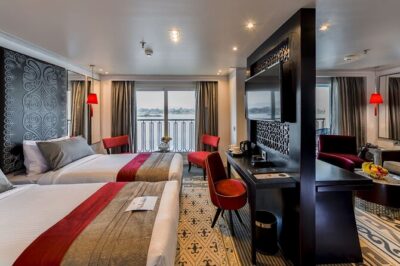
Luxury 5 Days Nile River Cruise from Luxor to Aswan with Private Tour Guide
Read our review →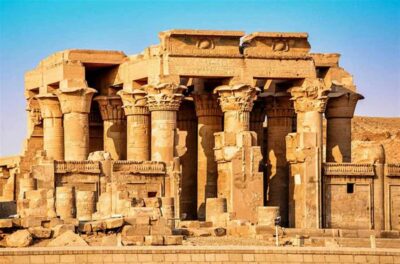
4-Day Nile Cruise to Aswan w/ Balloon & Flights
Read our review →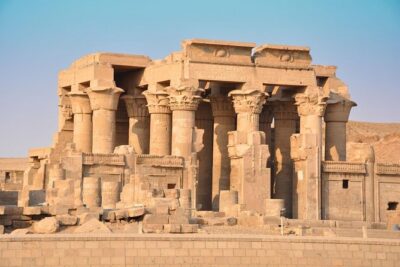
5 Day 4 Night – Deluxe Nile Cruise Luxor to Aswan – Private Tour
Read our review →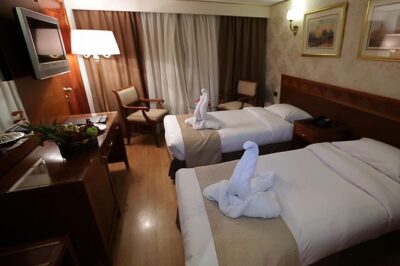
4-Night, 5-Star Nile Cruise from Luxor to Aswan
Read our review →Lists this sailing appears in