
Review · PARIS
Paris: Seine River and Canal Saint-Martin Cruise
The most unusual part of this Paris boat ride comes after the grand Seine views: the boat slips underground beneath Bastille Square and spends about 1.24 miles in a tunnel pierced by openings to the sky. Then it works through the locks of Canal Saint-Martin, a leafy urban waterway far removed from the usual sightseeing route.
I like the mix of famous sights and overlooked Paris, and I like that the locks turn a quiet boat ride into a small mechanical show. The guide explains the landmarks and canal works in French and English, with past guides such as François and Carl earning praise for clear, engaging commentary.
The main drawback is practical: this is a one-way trip, ending near Parc de la Villette rather than back at the Musée d’Orsay. Allow time and money for your return, and bring water or a snack since the onboard catering may be limited.
Key Points to Know Before You Go
- The 1.24-mile tunnel is the cruise’s strangest and most memorable stretch, with daylight filtering through openings overhead.
- Nine locks make the Canal Saint-Martin section active rather than passive, as the boat rises or lowers between water levels.
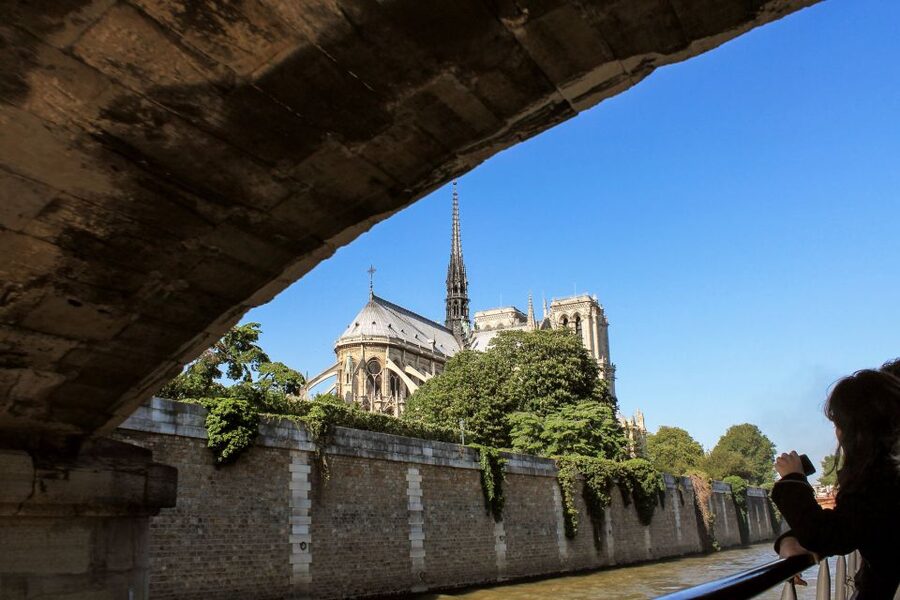
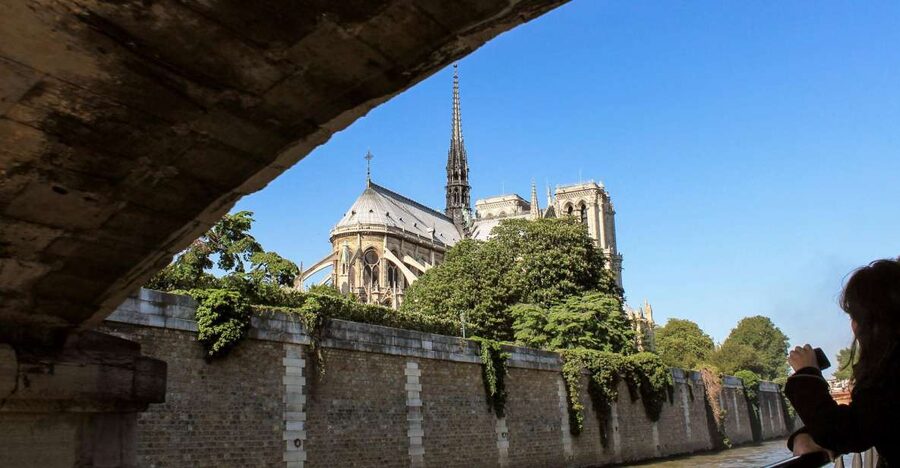
- You see the Seine’s classic Paris from a different angle, including Notre-Dame, the Louvre, the Tuileries Garden, and Pont des Arts.
- The boat finishes at Parc de la Villette, about 7 kilometers from the departure area, so this is not a round trip.
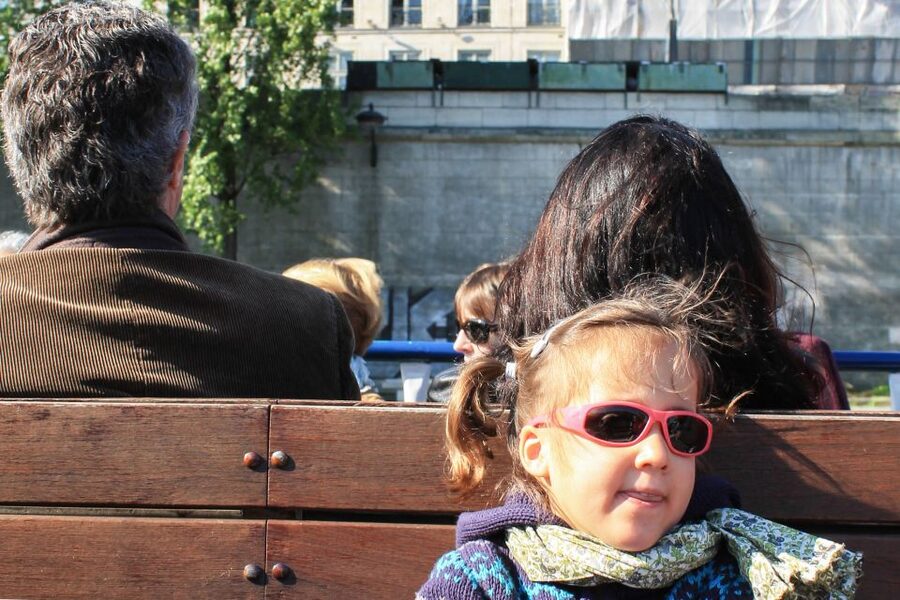
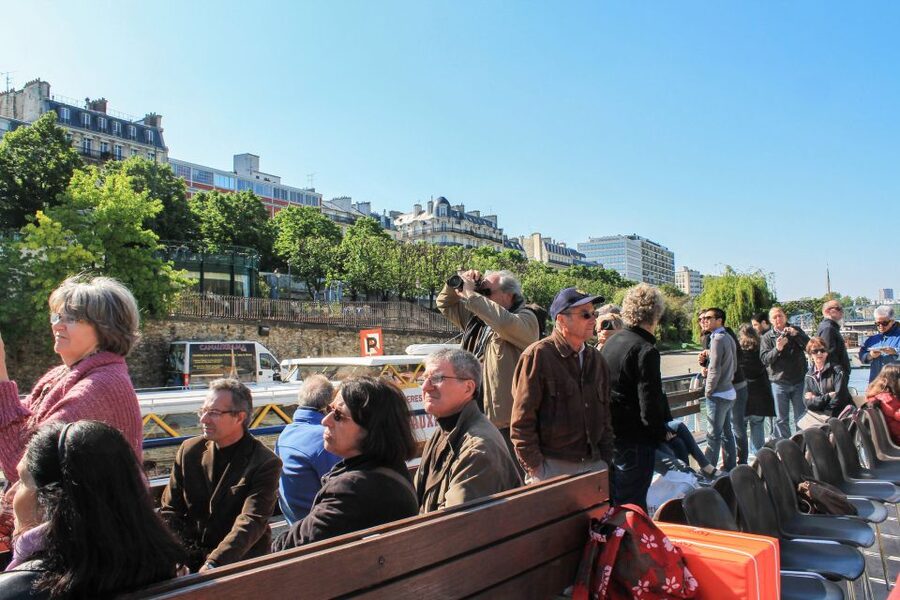
- Arrive early for the top deck, especially on a sunny day when outdoor seats fill quickly.
- The cruise runs for 150 minutes, making it a relaxed half-day activity but a long stretch for very young children.
From the Musée d’Orsay to the Classic Seine Views
Your boat is moored at Port de Solférino, just below the Musée d’Orsay. The wooden main staircase leads down to the water, but give yourself extra time to find the correct boarding point. The Batobus terminal sits opposite the museum, and it is easy to mistake that for your departure spot.
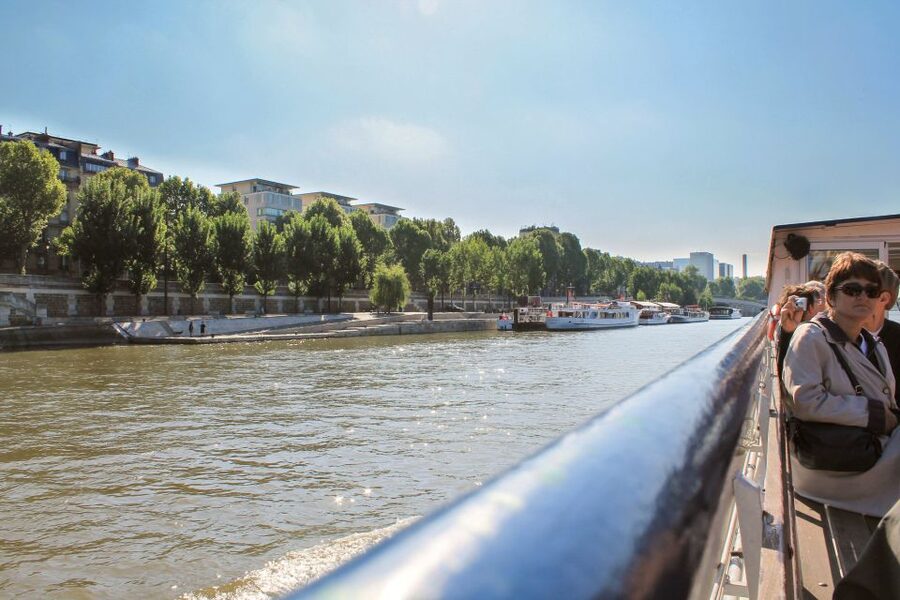
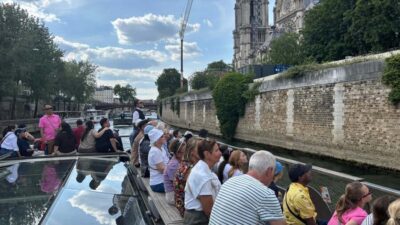
Once aboard, the opening section follows the Seine through central Paris. This is the familiar Paris of grand facades, stone bridges, formal gardens, and famous monuments, but the water gives you a clean view without the stop-and-start rhythm of city streets.
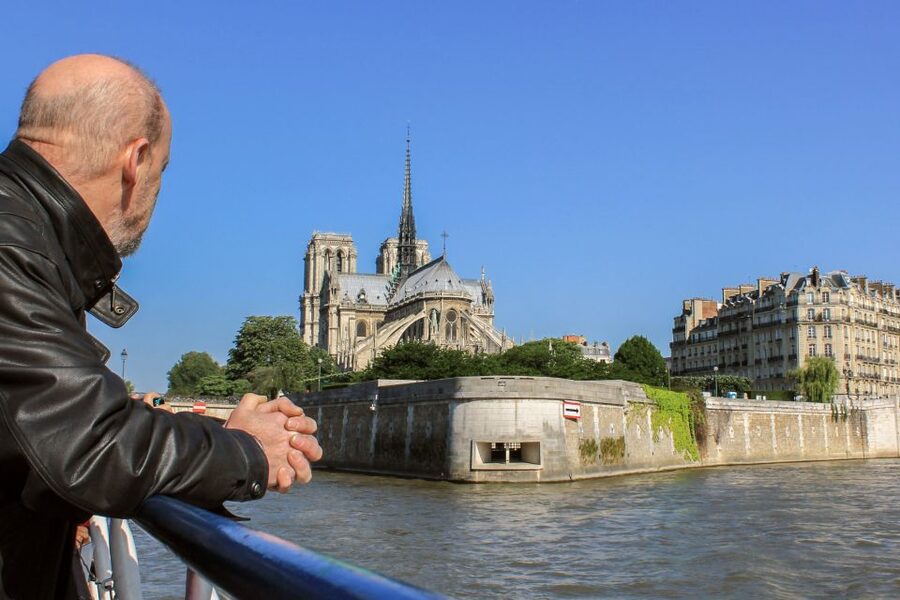
You pass the Tuileries Garden, the Louvre, Pont des Arts, and Notre-Dame Cathedral. The route is especially useful if you have already walked these areas and want to see how the monuments fit together from the river. It also gives your feet a rest after a morning of museums and pavement.
The boat’s commentary points out buildings and events along the banks. It is delivered in French and English, sometimes by a guide with a strong French accent. Some passengers found the English hard to follow, especially outside near the engine or when the speaker system was weak, so an inside seat may be better if the explanation matters more to you than the view.
You can move around the boat for photographs, which helps when a bridge or monument appears on the opposite side. Still, do not expect a nonstop parade of major sights. The Seine portion is scenic, but the real character of this trip begins when the boat leaves the central river route.
More Canal Cruises in Paris:
- Paris: Cruise on the Saint-Martin Canal and Seine River
★ 4.3 · 2,202 reviews - Seine River Cruise and Paris Canals Tour
★ 3.5 · 1,169 reviews - Paris: Cruise from The Canal Saint Martin to The Seine River
★ 4.6 · 224 reviews
Turning Toward Bastille and the Canal Saint-Martin
The cruise continues toward the entrance to Canal Saint-Martin, where Bastille Square rises above the waterway. This transition is one of the reasons to choose this outing instead of a standard Seine sightseeing boat.
A typical Seine cruise gives you a polished run past Paris landmarks. This route adds the city’s working canal system, with narrow stretches, locks, low bridges, leafy banks, and a much quieter mood. You see a part of Paris that most first-time sightseeing routes skip.
The canal is tied to the city’s practical past. It was built as a water route rather than a scenic ornament, and its locks still control the boat’s progress. The change in scale is striking. After the broad Seine, the canal feels enclosed and close to the surrounding neighborhoods.
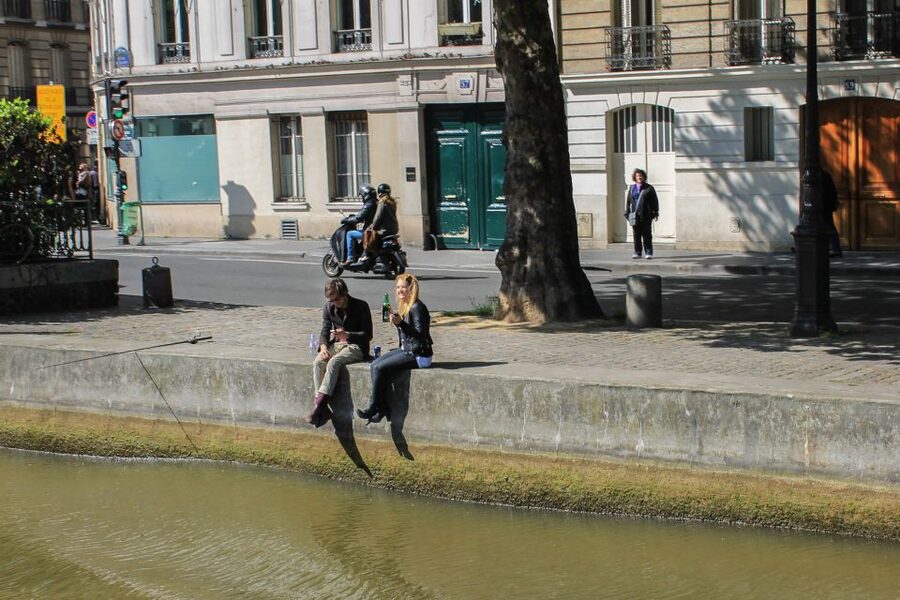
The banks are lined with chestnut trees, fishermen, and pedestrian bridges. These details make the canal feel more local and less ceremonial than the river. You may also notice how the route changes the pace of the outing. There are fewer headline attractions, but more time to watch the water, bridges, locks, and ordinary city life.
This is a good section for people who enjoy how a city works. If you only want one quick circuit of Paris’s major monuments, the canal may seem slow. If you like infrastructure, urban history, and unusual routes, it is the part you will remember.
The Underground Passage Beneath Bastille
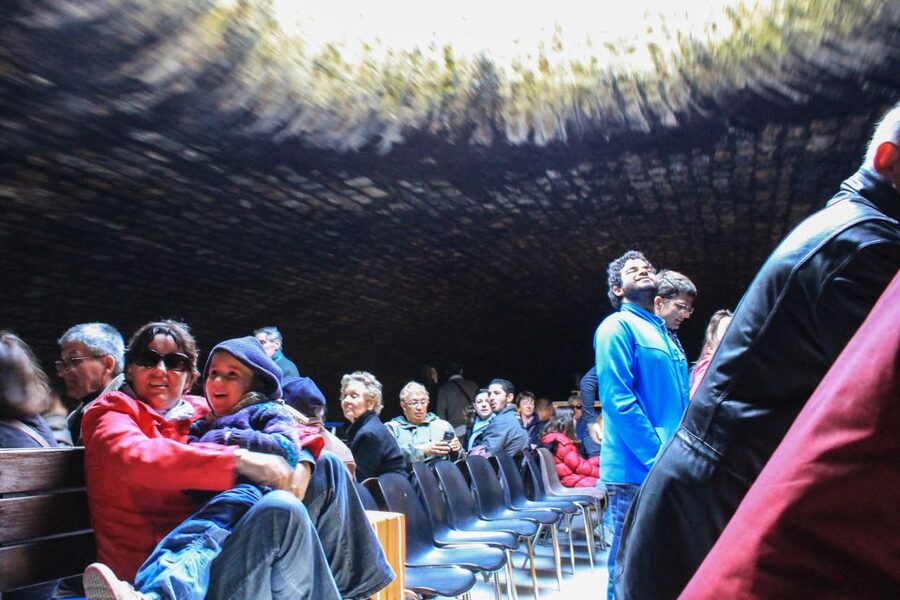
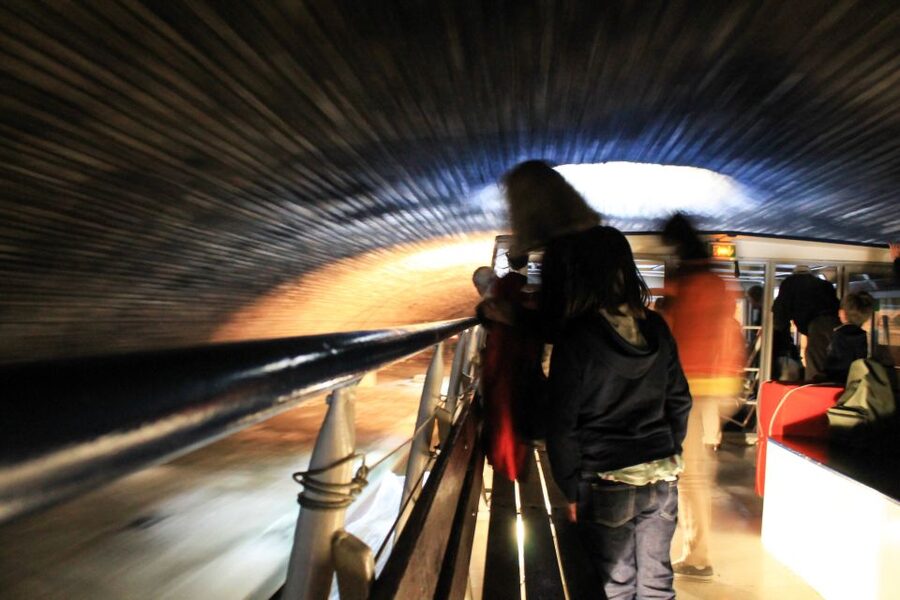
The cruise’s most distinctive moment comes when the boat enters the long tunnel beneath the city. The passage runs about 1.24 miles and is lit by perforations that allow small amounts of daylight to reach the water.
Do not expect a short bridge tunnel that lasts only a minute or two. This is a substantial underground stretch, and the change from leafy canal to dark, echoing waterway gives the ride an eerie edge. The boat continues through Paris while streets and buildings pass overhead, out of sight.
The tunnel can feel magical, but it is also a quiet period with fewer views. If you want photographs, there is not much to frame beyond the openings and the tunnel walls. Instead, listen to the guide and watch the light change as the boat moves forward.
The passage also helps explain why Canal Saint-Martin is such a surprising part of Paris. Above ground, the city is full of traffic, shops, and monuments. Below ground, the canal is slow, enclosed, and almost hidden from the normal street experience.
This is one reason the cruise works well after several busy days of sightseeing. You are still moving through the city, but you are not fighting traffic or standing in museum lines. The boat provides a calm ride with a few unusual surprises.
Nine Locks and the Mechanics of Canal Saint-Martin
After the tunnel, the boat reaches the more open sections of Canal Saint-Martin. Here, the locks provide the main event.
The boat does not simply glide along a flat canal. It enters a lock, waits while the gates close, and then rises or lowers as water flows in or out. Once the water reaches the next level, the gates open and the boat continues. The process repeats through a series of nine locks.
I find this more interesting than it may sound on paper. You can see the steel doors close at both ends and watch the water level change around the boat. It turns a sightseeing ride into a working demonstration of city engineering.
The locks also explain why the trip takes 150 minutes. The boat is not traveling continuously at speed. Much of the time goes into positioning, waiting, and adjusting water levels. If you want a quick ride, this will feel long. If you enjoy the process, the pauses give you time to look around and hear the commentary.
The canal banks remain attractive during this stretch, with trees, footbridges, and apartment buildings close to the water. The atmosphere is romantic without being overly formal. On a pleasant day, the open deck is the best place to watch the locks and take pictures.
There is a tradeoff. Sitting outside may give you the best views, but the commentary can be harder to hear. I would choose an outdoor seat for scenery and move inside when the guide is discussing a place or event I particularly want to understand.
More river trips worth booking around Paris:
- Paris: 1-Hour Seine Cruise departing from the Eiffel Tower
★ 4.4 · 77,472 reviews - Paris: Evening River Cruise with Music
★ 4.4 · 22,721 reviews - Paris: Tootbus Hop-on Hop-off (Optional River Cruise)
★ 4.3 · 15,279 reviews - Paris: Illuminations River Cruise with Audio Commentary
★ 4.3 · 12,340 reviews
Frederic Lemaître, the Hotel du Nord, and the Dead Lock
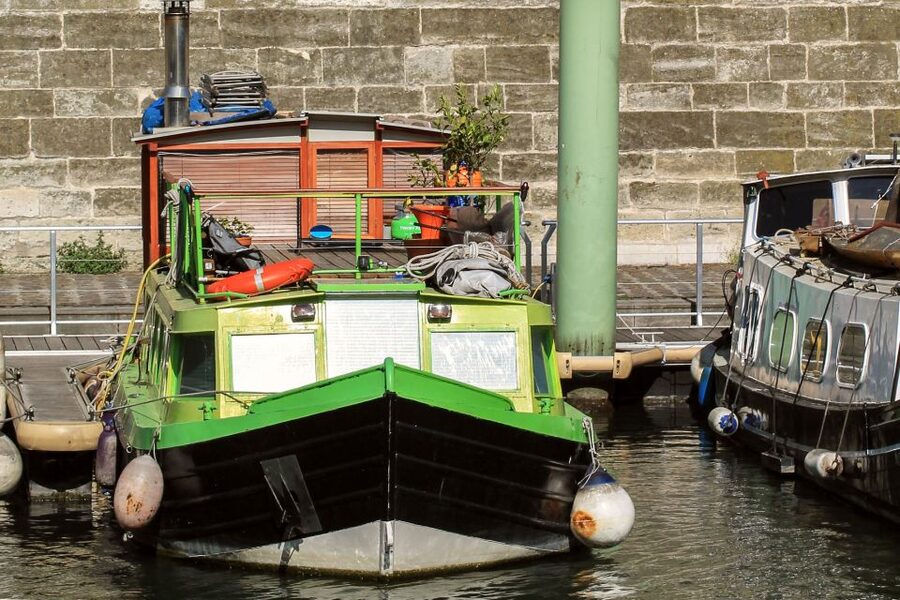
Near the Temple area, the route passes the bust of actor Frédéric Lemaître, the Récollets Lock, and the Hotel du Nord. These stops add texture to the canal experience. You are not just passing trees and bridges. The guide connects the waterway with people, buildings, and older Paris stories.
The Hotel du Nord is linked with the famous 1938 French film of the same name, which gives this otherwise quiet canal stretch a place in cinema history. The route also approaches the Dead Lock, associated with the former Montfaucon gibbet.
The gibbet was an old execution site, and the canal’s darker stories continue with references to François Villon. The guide may point out where these past places fit into the modern city. It is a reminder that Paris history is not confined to palaces and cathedrals.
Some commentary can be playful or a little crass, depending on the guide. Most of the time, the historical narration is a strong part of the outing, but families with small children may prefer to focus on the canal scenery rather than every story.
This section rewards a listener. You will get more from it if you pay attention to the names and locations instead of treating the cruise as background scenery. The information helps you see the canal as a living part of Paris rather than a decorative boat route.
Bassin de la Villette and the Final Stretch
The canal eventually opens into Bassin de la Villette, a broad water basin that feels more spacious after the narrow locks and tunnel. The cruise then continues toward the arcing footbridge on Rue de Crimée.
The changing scenery is part of the pleasure. The route begins with monumental central Paris, contracts into an underground passage, winds through locks and tree-lined banks, then opens again near the city’s northeastern districts.
The final destination is Parc de la Villette. From the boat, you can see the Cité des Sciences, the Music Museum, and the park’s themed gardens. The area offers more to explore, especially if you are traveling with children or want to continue your day away from the crowded center.
The ending is also where you need to plan carefully. The boat does not return to Port de Solférino. You are dropped off in northeast Paris, roughly 7 kilometers from the starting point, and the return can require the Métro, a taxi, or a substantial walk.
That arrangement is not a small footnote. It affects how you plan the rest of the day. Do not schedule a museum reservation near the Musée d’Orsay immediately after the cruise. Instead, treat Parc de la Villette as your next stop, or leave a generous margin for getting back toward central Paris.
Is $28 a Good Price for 150 Minutes?
At $28 per person, this is good value if you want more than a standard one-hour Seine circuit. You get two distinct waterways, central landmarks, a long underground passage, nine locks, and live commentary in two languages.
The value is strongest because the ride combines sightseeing with an experience you cannot reproduce simply by walking along the Seine. You could visit the canal banks on foot, but you would not see the locks from inside the waterway or pass through the Bastille tunnel by boat.
The price is less attractive if your only goal is a quick view of Notre-Dame and the Louvre. A shorter Seine ride would suit that purpose better. Here, nearly half a day is devoted to the canal system, so you need to be interested in the route itself.
The boat’s catering appears limited. Bring water, especially in warm weather, and consider packing a small snack. Coffee may be available during the trip, but do not count on a full range of food and drinks.
Timing, Seating, Weather, and Family Fit
Departures are listed at 10 a.m. and 3 p.m., with daily cruises from May through August and availability outside those months subject to the schedule. Check the exact time before booking because availability can change.
Arrive early if you want the top deck. The outdoor seats are popular in good weather, and arriving at the last minute may leave you with fewer choices. If you care most about the commentary, sit where the speakers are easiest to hear rather than automatically choosing the highest seat.
The cruise runs rain or shine. Paris weather can change quickly, so bring a layer or rain protection instead of assuming the day will remain clear. The open deck is pleasant in sunlight but less appealing in rain or wind.
Families can enjoy the locks, tunnel, and changing scenery. Children who like boats or machines may find the lock operation fascinating. Very young children may struggle with the 150-minute duration, especially during the slower sections.
The cruise is not suitable for wheelchair users. The meeting point is reached by a wooden staircase, and the supplied information does not indicate an accessible boarding arrangement.
Who Should Book This Paris Canal Cruise?
I would choose this trip if you have already seen the major Paris sights, want a slower afternoon, or enjoy unusual city infrastructure. It is also a strong choice for repeat visitors who have done a standard Seine boat ride and want something less predictable.
It suits couples looking for a calm outing, families interested in locks and tunnels, and anyone who wants to rest tired feet without giving up sightseeing. The romantic footbridges, chestnut trees, and quiet canal banks give it a softer mood than the crowded center.
I would hesitate if you dislike long boat rides, need to finish near the Musée d’Orsay, or want constant monument views. The one-way ending requires planning, and the guide’s English may be difficult to follow at times, particularly from the outdoor deck.
Book it for the route, not just for the monuments. The Seine sights are a good opening act, but the tunnel and Canal Saint-Martin locks are what make this a distinctive Paris experience.
FAQ
How long does the cruise last?
The cruise lasts 150 minutes, or 2.5 hours.
Where does the boat depart?
The boat departs from Port de Solférino, just below the Musée d’Orsay. You reach the port by using the wooden main staircase.
Does the cruise return to the Musée d’Orsay?
No. It is a one-way cruise and finishes near Parc de la Villette in northeast Paris, about 7 kilometers from the departure area.
What languages are used for the commentary?
Live commentary is provided in French and English.
Does the cruise operate in bad weather?
Yes. The cruise operates rain or shine.
Does the boat pass through a tunnel?
Yes. The route includes a tunnel beneath Paris that is about 1.24 miles long, with openings that let in daylight.
Is the cruise suitable for wheelchair users?
No. The activity is listed as unsuitable for wheelchair users.
Newly added river trips around Paris
- Fashion Design Workshop & Brunch on a Seine River Boat Paris★ 5.0 · 2 reviews
- Eiffel Tower Guided Tour & Seine River Cruise★ 5.0 · 4 reviews
- Paris: Eiffel Tower Summit Access Tour and River Cruise★ 3.2 · 19 reviews
- Private 5-Hour Paris Tour with Local Guide + Seine Cruise★ 3.9 · 3 reviews
- Paris: Catacombs Ticket and Seine River Cruise★ 4.1 · 853 reviews
- Paris: Cruise from The Canal Saint Martin to The Seine River★ 4.6 · 224 reviews
- Bateaux Mouches Sightseeing Cruise on the Seine River in Paris★ 3.5 · 818 reviews
- Seine River Sightseeing Cruise and Dinner at Le Bistro Parisien★ 4.0 · 750 reviews
Paris Seine River Cruises, compared.
1-Hour Seine Cruise departing from the Eiffel Tower
Read our review →
Illuminations River Cruise with Audio Commentary
Read our review →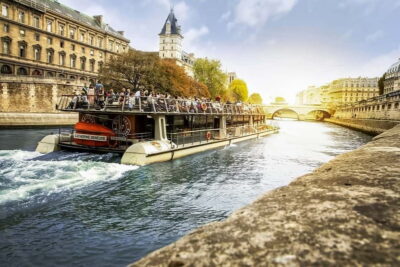
Seine Cruise & Crepe Tasting near the Eiffel Tower
Read our review →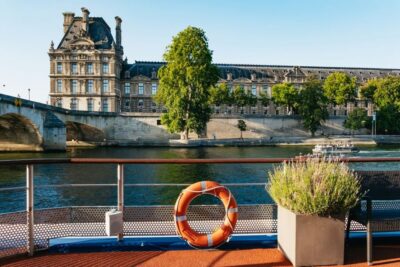
Louvre Museum Entry Ticket With Host and River Cruise
Read our review →
Eiffel Tower Access by Elevator & Seine River Cruise
Read our review →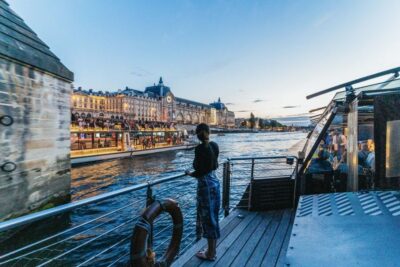
3-Course-Dinner Cruise on the Seine with live music
Read our review →Lists this sailing appears in